How Much Sleep Do I Need?

Sleep is a critical pillar of health. That being said, the quality of sleep impacts core metabolic functions, such as cognition, immunity, and cardiovascular health.

How Much Sleep Do I Need?

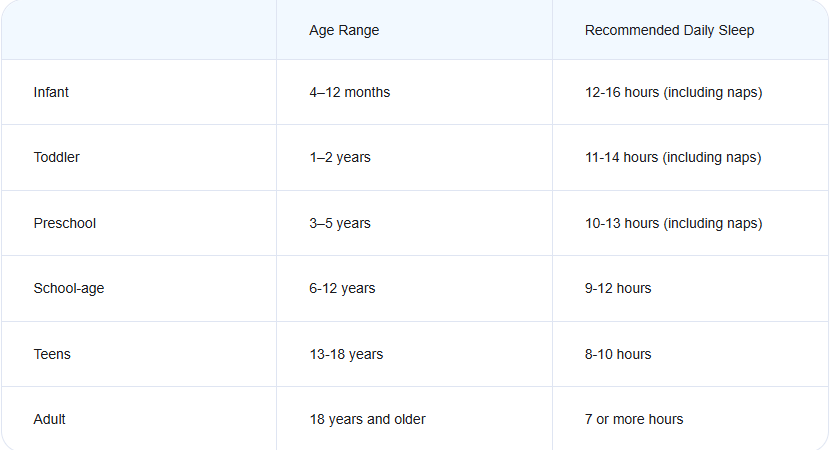
Some people have no idea how much sleep they should get or do not budget enough time for sleep. Most adults should get 7 to 9 hours of sleep a night. While babies, young children, and teens need more sleep than adults do.

The following table shows an overview of how much sleep most people need, but the exact amount of sleep should be different based on their health factors.

A table illustrates the amount of time people of various ages should sleep per night

What Time Should I Go To Sleep?

There is no specific bedtime that you should follow, but there are ways to determine optimal bed and wake-up times based on age, geographic location, and lifestyle preferences.

Doctors suggest sticking to a consistent sleep schedule, waking up and falling asleep at the same time each day, even on the weekends.

What Time Should I Wake Up?

It’s important to choose a wake-up time that fits well with your schedule but also ensures that you aren’t disrupting a sleep cycle. Waking up in the middle of a sleep cycle can leave residual feelings of sleepiness and can compromise cognitive function and mood during the day.

The average adult cycles through each stage of sleep several times per night, with each sleep cycle lasting approximately 90 to 120 minutes. Aim to wake-up time that allots for at least four full sleep cycles.

You can use this to calculate the best wake-up time based on your age and bedtime.

Why Is It Important to Get Enough Sleep?

Sleep is vital for nearly every system of the body. Getting enough sleep can help the body restore and avoid the consequences of sleep deprivation.

Sleep deprivation has short and long-term effects on physical, emotional, and mental health.

In the short term, missing rest leads to poor focus, reduced cognitive function, slower reaction times, and heightened irritability. It also weakens your immune system, making you more prone to illness.

The long-term consequences are even more severe, as chronic sleep debt is linked to obesity, diabetes, heart disease, and mental health issues like anxiety and depression. Ultimately, lack of sleep diminishes your overall quality of life. Prioritizing consistent, high-quality sleep is essential for physical recovery, emotional stability, and maintaining long-term wellness. Don’t ignore your need for rest.

How Do I Get Better Sleep?

A number of simple lifestyle changes can be used to improve sleep, which can lead to better physical, cognitive, and emotional wellness.

You can check the post here to see more ways to improve the sleep at night.

Scroll to Top